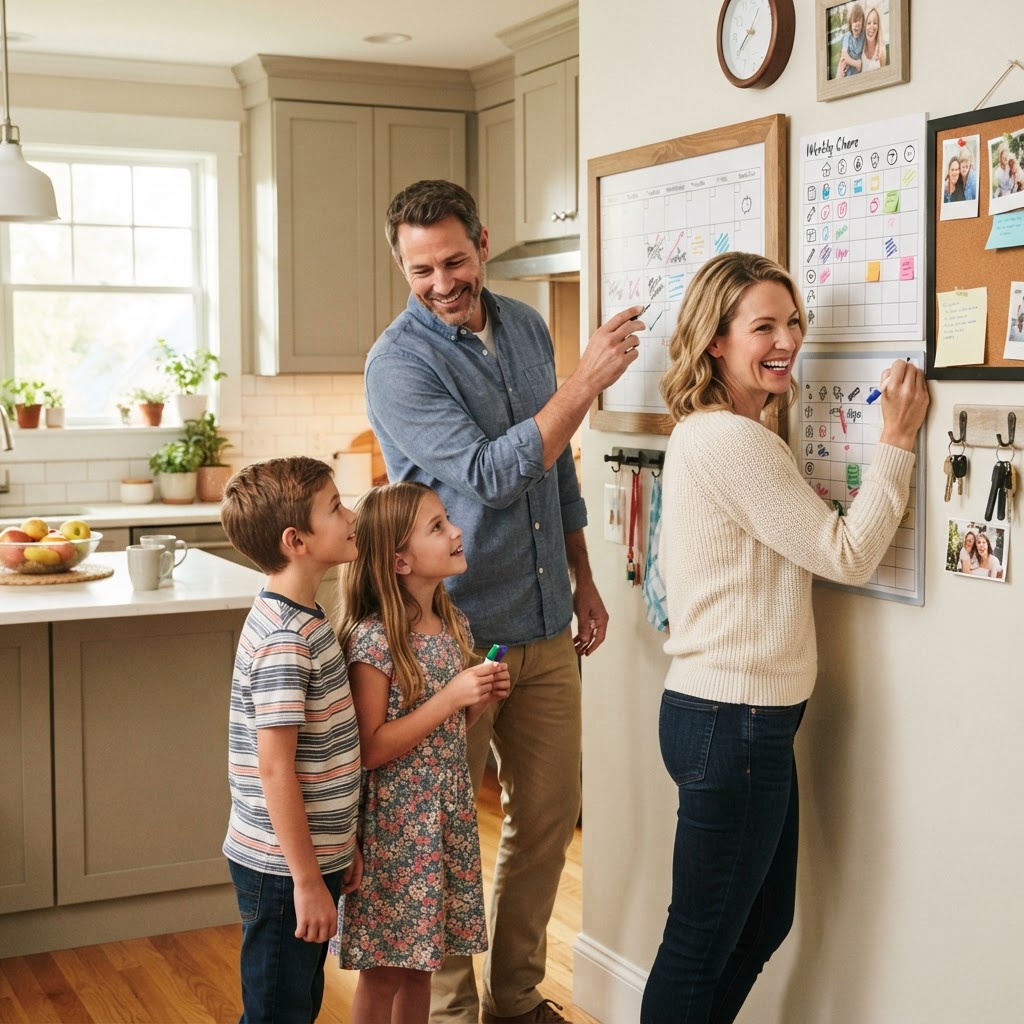
Streamlining Home Operations: Why Family Management Matters
We often talk about family discipleship in lofty terms: daily devotions, intentional prayer, and deep theological conversations. But for many families, the reality of the daily grind makes these moments feel impossible. If your home life feels like a constant state of crisis management, it is hard to pivot toward spiritual formation. Streamlining your home operations isn't just about productivity; it is about creating the margin necessary for a life of faith.
The Margin for Discipleship
When our schedules are packed and our households are chaotic, we lose our ability to be present. Discipleship requires space—space for spontaneous conversation, space for questions, and space for rest. By simplifying the way you manage your home, you aren't just saving time; you are protecting the environment where your children learn what it looks like to follow Jesus.
Simplifying the Logistics
Modern family life involves an endless stream of decisions and logistics. By implementing systems that reduce decision fatigue, you free up mental energy for the things that matter most. Consider these practical shifts to reclaim your household rhythm:
- Weekly Sync Meetings: Spend fifteen minutes on Sunday night reviewing the week's calendar, meal plan, and responsibilities. This prevents surprises and sets a tone of partnership.
- The Digital Hub: Use a shared digital family calendar so everyone is aware of the schedule. This keeps the 'Who is doing what?' conversations from filling your day.
- Batch Cooking and Prep: When we spend less time agonizing over last-minute meals, we spend more time actually eating together. Use a basic meal template to reduce the daily stress of decision-making.
- Defining Roles: Even young children can take ownership of specific household tasks. This fosters a sense of contribution and helps everyone feel like part of the team.
Resting as an Act of Faith
One of the biggest hurdles to healthy family life is the pressure to 'do it all.' We often feel that if we aren't busy, we aren't being productive. However, a biblical understanding of Sabbath reminds us that our value does not come from our output. Establishing a rhythm of rest within your home is a powerful witness to your children that life is more than just a series of tasks to be finished.
Cultivating the Environment
Your home is the primary theater of discipleship. When you reduce the clutter—both physical and mental—you allow the gospel to breathe in your space. As you head into the coming week, ask yourself: What is one administrative task in your home that creates unnecessary tension, and what is one small system you could put in place to simplify it?
Transitioning from Chaos to Calm
The transition from a high-stress workday to a grace-filled evening is often where discipleship lives or dies. Many families fall into the 'entryway trap'—the frantic thirty minutes after school or work where backpacks are flung, mail is ignored, and tempers flare. This is a systems problem, not a character flaw. When we treat the arrival home as a intentional transition rather than a collision of schedules, we invite peace into the living room.
Think of this as your 'landing strip.' By preparing a designated space for gear to land immediately upon entering, you prevent the visual noise that often fuels irritability. More importantly, it creates a physical cue that the 'work' phase of the day has concluded and the 'family' phase has begun. When the physical space is clear, our emotional bandwidth increases, allowing us to pivot from being managers of a household to shepherds of our children’s hearts.
The Theology of the To-Do List
We often view household chores as obstacles to spiritual growth, but we might consider flipping that perspective. Every load of laundry, every scrubbed dish, and every organized shelf is an act of stewardship. If we view these tasks as mundane chores, we will inevitably resent them. However, when we frame them as service to our neighbors—our children and spouse—the act of organizing becomes a tangible way of loving them.
You can bring spiritual weight to your logistics by vocalizing your intent. Instead of saying, 'I have to clean the kitchen,' try saying, 'I am tidying the kitchen so we can have a peaceful breakfast together tomorrow.' This subtle shift models for your children that service is the heartbeat of a Christian home. It transforms our systems from rigid rules into expressions of care.
Practical Steps to Simplify Your Space
To help you move forward, consider integrating these specific, manageable habits into your weekly workflow:
- The Sunset Ritual: Before going to bed, spend ten minutes resetting the common living areas. A clean slate in the morning reduces stress levels for the entire family.
- Information Centralization: Keep a physical notebook or a whiteboard in the kitchen for grocery needs and urgent reminders to ensure nothing is lost in the shuffle.
- The Saturday Morning 'Reset': Dedicate one hour of the weekend to a quick family-wide cleanup. Turn on music, work together, and finish with a celebratory treat.
- Digital Boundaries: Designate specific times when phones and tablets are put away to ensure the evening is focused on connection rather than consumption.
Remember that your efforts to organize your home are a silent prayer for the peace of your family, so be patient with yourself during this process. You are building a sanctuary for grace to grow, and every small step toward order is a victory for your home's witness. Until next time — we will keep the toolbox stocked. See you in the next post.