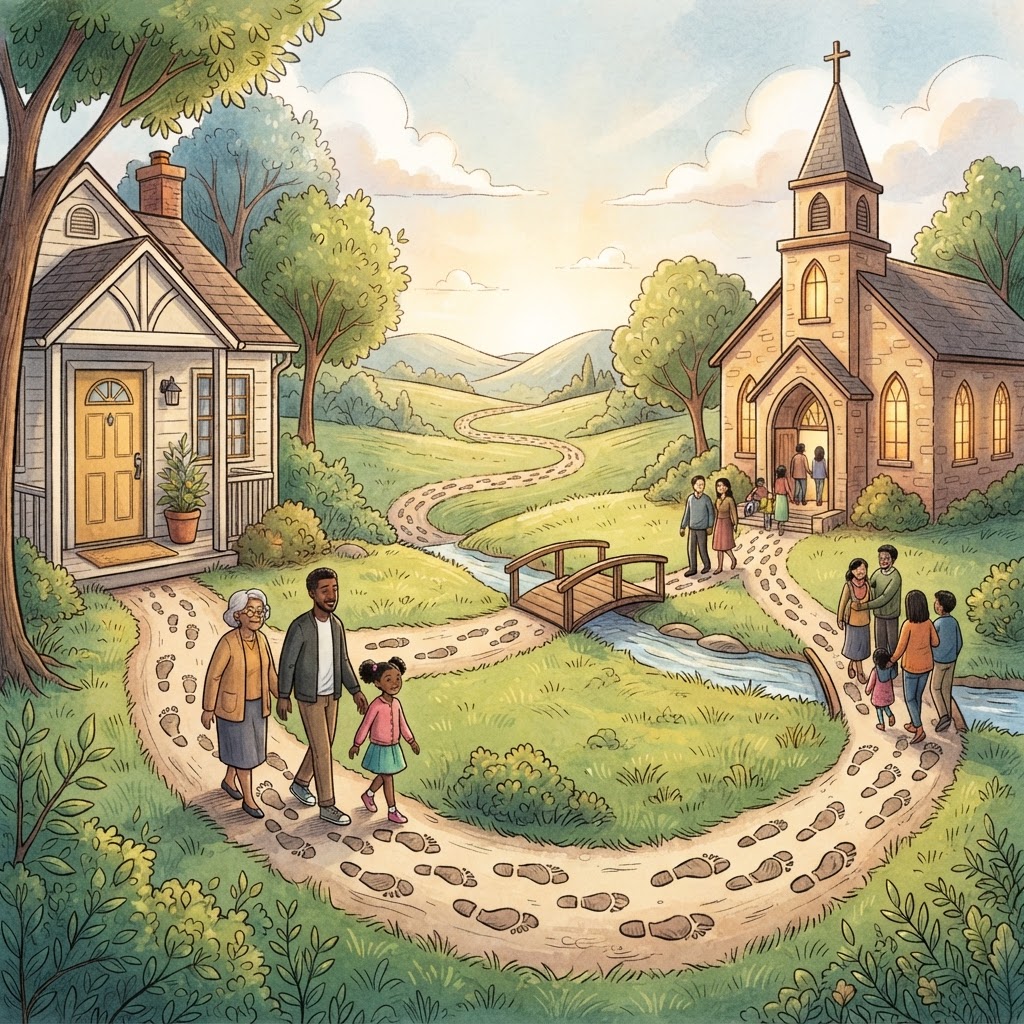
The Power of Showing Up: Why Consistency Matters in Community
The Myth of the 'Big Moment'
We often think that community is built through big, life-changing moments. We wait for the perfect event or the grand gesture to forge deep bonds. But the truth is, the strongest foundations of community are built on the boring, repetitive, and consistent act of simply showing up.
The Ministry of Presence
There is a profound difference between being present and just 'attending.' To attend is to be in the room; to be present is to be engaged, to be reliable, and to be available to those around you. In a world that is increasingly transient and distracted, your consistency is a gift that builds trust over time.
Why Consistency is a Superpower
When you commit to being a regular part of a community—whether it is a small group, a neighborhood watch, or a church volunteer team—you signal to others that they can count on you. This reliability is what allows vulnerability to flourish:
- Consistency creates a 'safe space' where people feel comfortable sharing their true selves because they know you aren't going anywhere.
- You become a known quantity, which reduces social anxiety and encourages deeper, more authentic conversation.
- It allows you to observe the subtle changes in the people around you, enabling you to offer help when it is actually needed, not just when it is convenient.
- It builds 'relational capital' that can be drawn upon when someone in your circle faces a crisis.
Staying the Course
Showing up isn't always easy. There will be seasons when you are tired or when the group feels stagnant. But sticking with it, even through the quiet seasons, is how we cultivate the deep roots necessary for a community to grow and thrive. You are planting seeds that you may not see bloom for months or even years.
Looking back at your own life, who is the person whose consistent presence has meant the most to you, and how can you emulate that for someone else this month?
Systems That Support Connection
We often fear that scheduling makes our relationships feel mechanical. However, true shepherding requires a framework that moves beyond good intentions. When we systematize our commitment to others, we stop relying on fleeting emotions and start relying on intentional patterns. For instance, consider the practice of 'micro-check-ins.' Instead of waiting for a monthly group meeting, establish a low-pressure system—a shared group text or a weekly coffee rotation—that keeps the connection alive in the margins of life. By removing the mental effort required to initiate contact, you free your emotional energy to actually listen and care when you are together. This is the beauty of a community rhythm: the system takes the weight of maintenance so that the ministry of relationship can take center stage.
Practical Steps for Everyday Community
If you want to move from being a periodic visitor to a pillar in your community, consider these intentional habits. It is not about doing more; it is about doing the right things with a steady heart:
- Adopt the 'five-minute rule': Arrive five minutes early or stay five minutes late to your group meetings. These transitional moments are often where the most honest conversations happen.
- Create a 'rhythm of recognition': Make it a goal to ask one specific question each week that isn't about church business, such as 'What is one thing that brought you joy this week?'
- Standardize your follow-up: If someone mentions a challenge or an upcoming appointment, set a reminder on your phone to text them specifically about it two days later.
- Commit to a duration: Rather than showing up indefinitely with no end in sight, commit to a season of six months. This lowers the barrier to entry while providing enough time for genuine roots to take hold.
As you step out into your community this week, remember that your faithfulness is a beautiful reflection of the One who never leaves our side. May you be encouraged to keep showing up, even in the smallest ways, knowing that your presence is a catalyst for grace. Until next time — we will save you a seat. See you in the next post.